The Artist
Daniel Stone
Born in London · Based in Mexico
Personal History
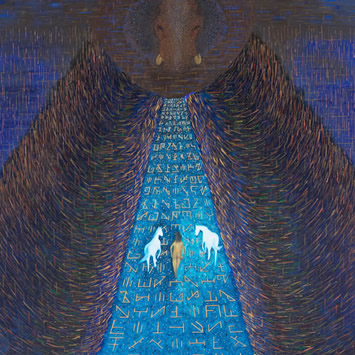
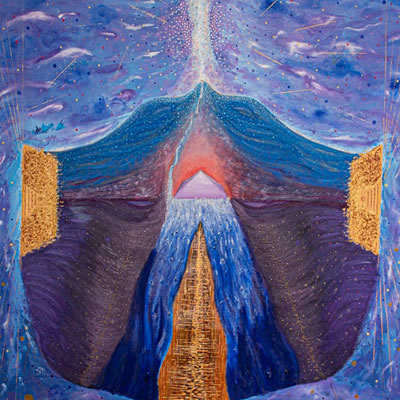
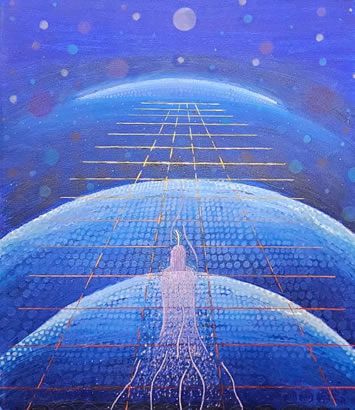
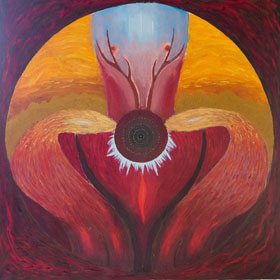
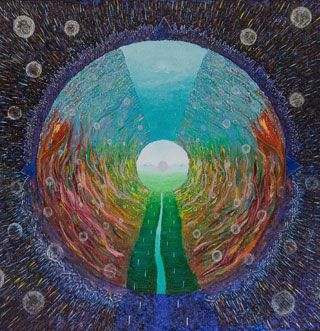
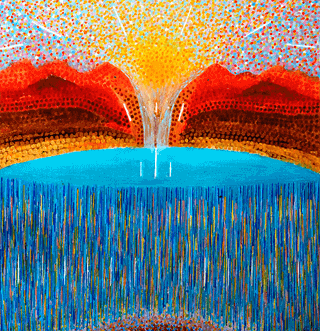
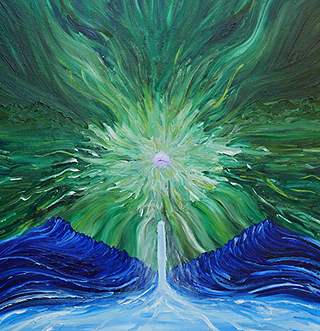
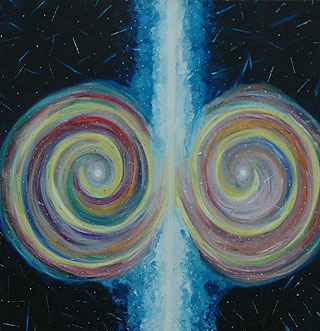
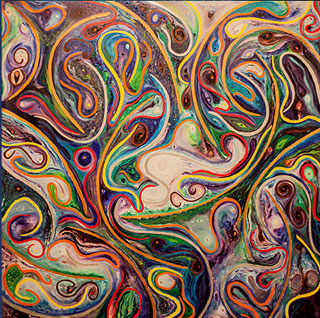
I was born in London, England. From childhood, I have always had very vivid dreams. I would travel to different worlds in those dreams and meet beings, some of them human, some of them animal, and some of them like mythical creatures, neither human nor animal. I started to paint in order to get closer to these places I went to in dreams and to communicate with the beings that I met. My life at night was far more interesting than my life in the day, and painting enabled me to spend more time in these fascinating and fantastic worlds.
It was the way in which I could bring the worlds of the night and the day together.
As I got older, I discovered different mediums and the language evolved. Apart from dreams at night, I also found myself seeing visions in meditation, or simply when I was out walking. I was developing different perceptions in the day as well as at night. I didn't have any early art education. I simply explored intuitively and, with practice, developed the techniques.
I didn't go to art school until I was living in Mexico, when I took part in the undergraduate degree programme at the Instituto Allende in San Miguel de Allende. I had always shied away from formal art education because I had met so many artists who had been to art school and were totally blocked through over-thinking. I was afraid that I would lose the intuitive freedom.
In the end, art school didn't really change the way I paint. It just gave me a bit more confidence, especially with drawing. The reason for my painting didn't change either. I still wanted to paint the places I experience in the dream of the night and the dream of the day.
Process
I start with a dream or a vision. The dream can be at night when I am asleep, but it can also be in a sort of waking dream state. The vision can come from meditation or from when I am out walking in the mountains. Sometimes the visions or dreams are very clear and I have a sense of a coherent drawing, but sometimes I just get a vague sense which can be no more than a feeling.
If I know the drawing to start with, then I practise the different aspects of it. For example, if there are animals or human figures, I practise to feel the form. Then I bring all the different aspects together. There will be several drawings as new information arises the more I draw. I keep drawing different versions until I sense an arrival.
If I don't have a clear drawing, then I start kind of half blind and just see what arises. It is a bit like automatic drawing, but I hold the feeling or the sense of the dream and draw from there.
Let the eyes of the dream draw for me.
Gradually, through many sessions, the dream is revealed and I can see it in the drawing. I take the drawing to the canvas. Sometimes the drawing is complex and detailed. I will make the drawing in pencil or charcoal, and then the painting begins. I start with the drawing as a guide, but usually the drawing does not stay in its original form. It evolves.
As I am painting, as with drawing, I am in communication with the dream or vision and new information comes constantly. This is true also when I am not painting. When I am walking, driving and particularly at night, I will feel the dream evolve and I get clear information about how to proceed, what to change and what colours to use.
The time I am working on the painting is not just the painting. It is also the not painting.
I enter the dream, enter the vision and live with it, walk with it, breathe with it. The painting will change forms, sometimes several times, as if one painting is just a window into the next painting which is closer to the truth of the dream.
This process of change and movement evolves through many versions until, as in the drawing, there is a sense of arrival. I cannot explain why a painting arrives at this place where you know there is no more to do. It is just a sense. This is how it is.
The Finished Painting
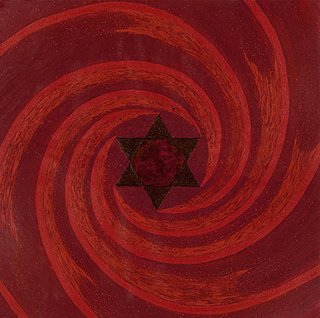
Many times paintings are a mystery to me when they are completed. I look at them in a kind of wonder. I enjoy the mystery. I listen to them. They teach me.
My experience is that, as Kandinsky wrote, the language of the inner worlds is universal. Some people see these paintings and recognise them, as if they too have experienced this place, this dream. They feel a sense of resonance, familiarity and knowing.
“This is the joy of painting, that it can communicate inner knowing.”
El Artista
Daniel Stone
Nacido en Londres · Residente en México
Historia Personal
Nací en Londres, Inglaterra. Desde niño siempre he tenido sueños muy vívidos. En ellos viajaba a mundos diferentes y conocía seres; algunos humanos, otros animales y algunos semejantes a criaturas míticas, ni humanas ni animales. Empecé a pintar para acercarme a esos lugares que visitaba en mis sueños y para comunicarme con los seres que encontraba allí. Mi vida nocturna era mucho más interesante que mi vida durante el día, y la pintura me permitía pasar más tiempo en esos mundos fascinantes y fantásticos.
Era la manera en que podía unir los mundos de la noche y del día.
A medida que fui creciendo, descubrí diferentes medios y el lenguaje fue evolucionando. Además de los sueños nocturnos, también comencé a tener visiones durante la meditación o simplemente cuando salía a caminar. Estaba desarrollando diferentes formas de percepción tanto durante el día como durante la noche. No tuve formación artística en mis primeros años. Simplemente exploraba de manera intuitiva y, con la práctica, fui desarrollando las técnicas.
No fui a una escuela de arte hasta que vivía en México, donde participé en el programa de licenciatura del Instituto Allende en San Miguel de Allende. Siempre había evitado la educación artística formal porque había conocido a muchos artistas que habían pasado por escuelas de arte y que estaban completamente bloqueados por pensar demasiado. Temía perder esa libertad intuitiva.
Al final, la escuela de arte no cambió realmente mi manera de pintar. Simplemente me dio un poco más de confianza, especialmente con el dibujo. Tampoco cambió la razón por la que pintaba. Seguía queriendo pintar los lugares que experimento en el sueño de la noche y en el sueño del día.
Proceso
Empiezo con un sueño o una visión. El sueño puede llegar por la noche mientras duermo, pero también puede aparecer en una especie de estado de sueño estando despierto. La visión puede surgir de la meditación o mientras camino por las montañas. A veces las visiones o los sueños son muy claros y tengo la sensación de ver un dibujo coherente, pero otras veces sólo percibo algo impreciso que puede no ser más que una sensación.
Si tengo claro el dibujo desde el principio, practico sus diferentes aspectos. Por ejemplo, si aparecen animales o figuras humanas, practico para sentir la forma. Después reúno todos esos elementos. Habrá varios dibujos porque, cuanto más dibujo, más información va surgiendo. Continúo creando distintas versiones hasta que siento que he llegado a un punto de llegada.
Si no tengo un dibujo claro, comienzo casi a ciegas y simplemente observo lo que surge. Es algo parecido al dibujo automático, pero mantengo conmigo la sensación o la esencia del sueño y dibujo desde ese lugar.
Dejar que los ojos del sueño dibujen por mí.
Poco a poco, a lo largo de muchas sesiones, el sueño se revela y puedo verlo en el dibujo. Después llevo el dibujo al lienzo. A veces el dibujo es complejo y detallado. Lo realizo a lápiz o carboncillo y entonces comienza la pintura. Empiezo utilizando el dibujo como guía, pero normalmente no permanece en su forma original. Evoluciona.
Mientras pinto, al igual que cuando dibujo, estoy en comunicación con el sueño o la visión y constantemente aparece nueva información. Esto también sucede cuando no estoy pintando. Cuando camino, conduzco y, especialmente, durante la noche, siento cómo el sueño evoluciona y recibo información muy clara sobre cómo continuar, qué cambiar y qué colores utilizar.
El tiempo en el que trabajo en una pintura no es solamente el tiempo que paso pintando. También es el tiempo en el que no estoy pintando.
Entro en el sueño, entro en la visión y vivo con ella, camino con ella y respiro con ella. La pintura cambia de forma, a veces varias veces, como si una pintura fuera simplemente una ventana hacia la siguiente, que se acerca más a la verdad del sueño.
Este proceso de cambio y movimiento evoluciona a través de muchas versiones hasta que, igual que ocurre con el dibujo, aparece una sensación de llegada. No puedo explicar por qué una pintura llega a ese punto en el que uno sabe que ya no queda nada más por hacer. Es simplemente una sensación. Así es.
La Pintura Terminada
Muchas veces, cuando termino una pintura, sigue siendo un misterio para mí. La observo con una especie de asombro. Disfruto del misterio. La escucho. Me enseña.
Mi experiencia es que, como escribió Kandinsky, el lenguaje de los mundos interiores es universal. Algunas personas ven estas pinturas y las reconocen, como si ellas también hubieran experimentado ese lugar, ese sueño. Sienten una resonancia, una familiaridad y una sensación de conocimiento interior.
“Ésta es la alegría de pintar: poder comunicar un conocimiento interior.”